Construction and remodel debris removal in Colorado Springs
The kitchen is gutted and the cabinets are stacked on the driveway. The bathroom tile is in buckets. The drywall from the basement finish is leaning on the garage wall. We haul it off between phases so the job keeps moving and the HOA stops writing.
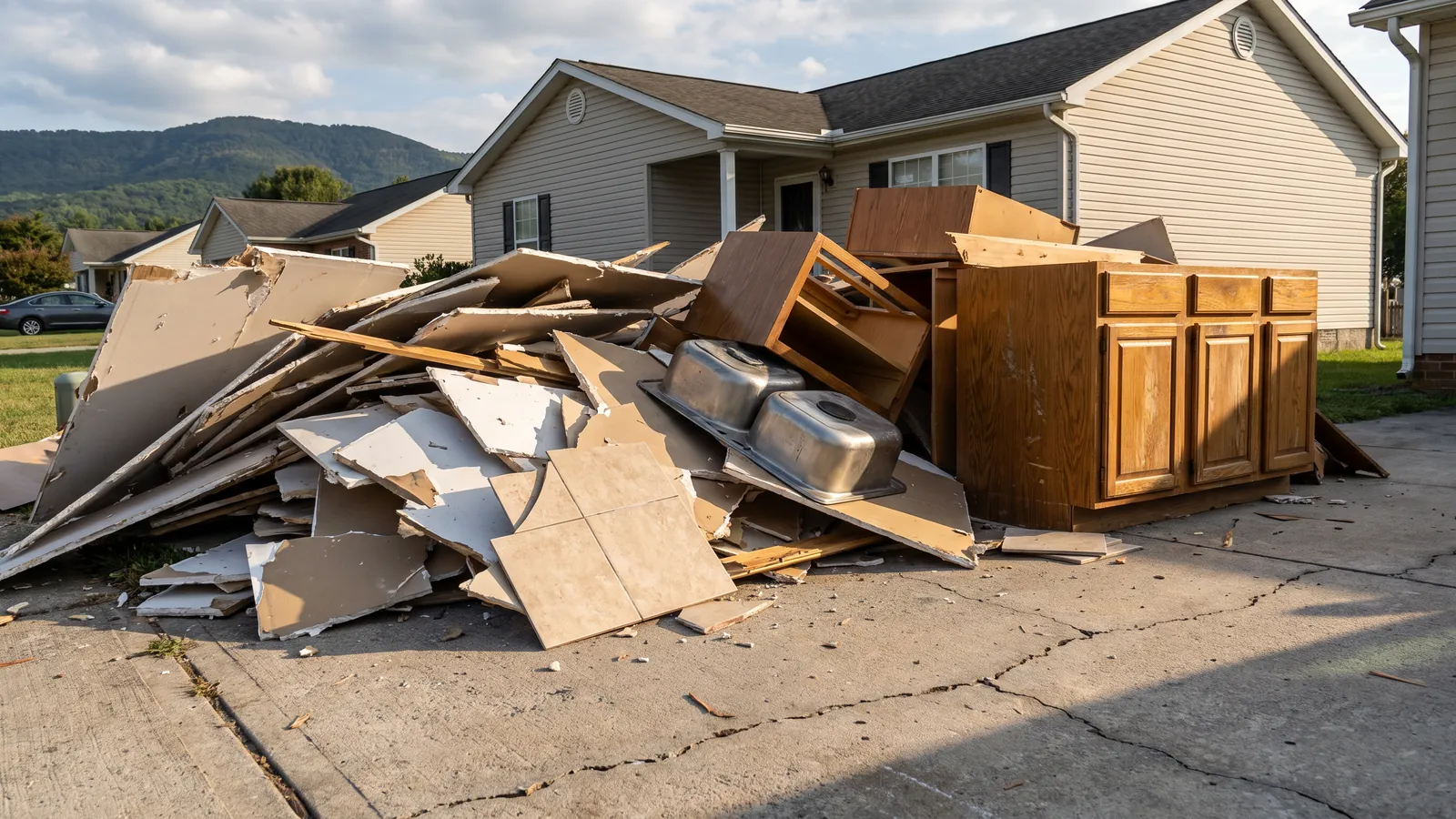
Remodel debris is the one load where weight decides nearly everything. A truck of broken drywall and old cabinets weighs a fraction of a truck of tile, mortar and concrete backer board, and the landfill charges us by the ton. So we quote construction debris by the truckload and by what is in it, and we say which it is: a light load at the low end of the range or a heavy one at the top. If your contractor can keep the heavy material separate from the light, you pay less.
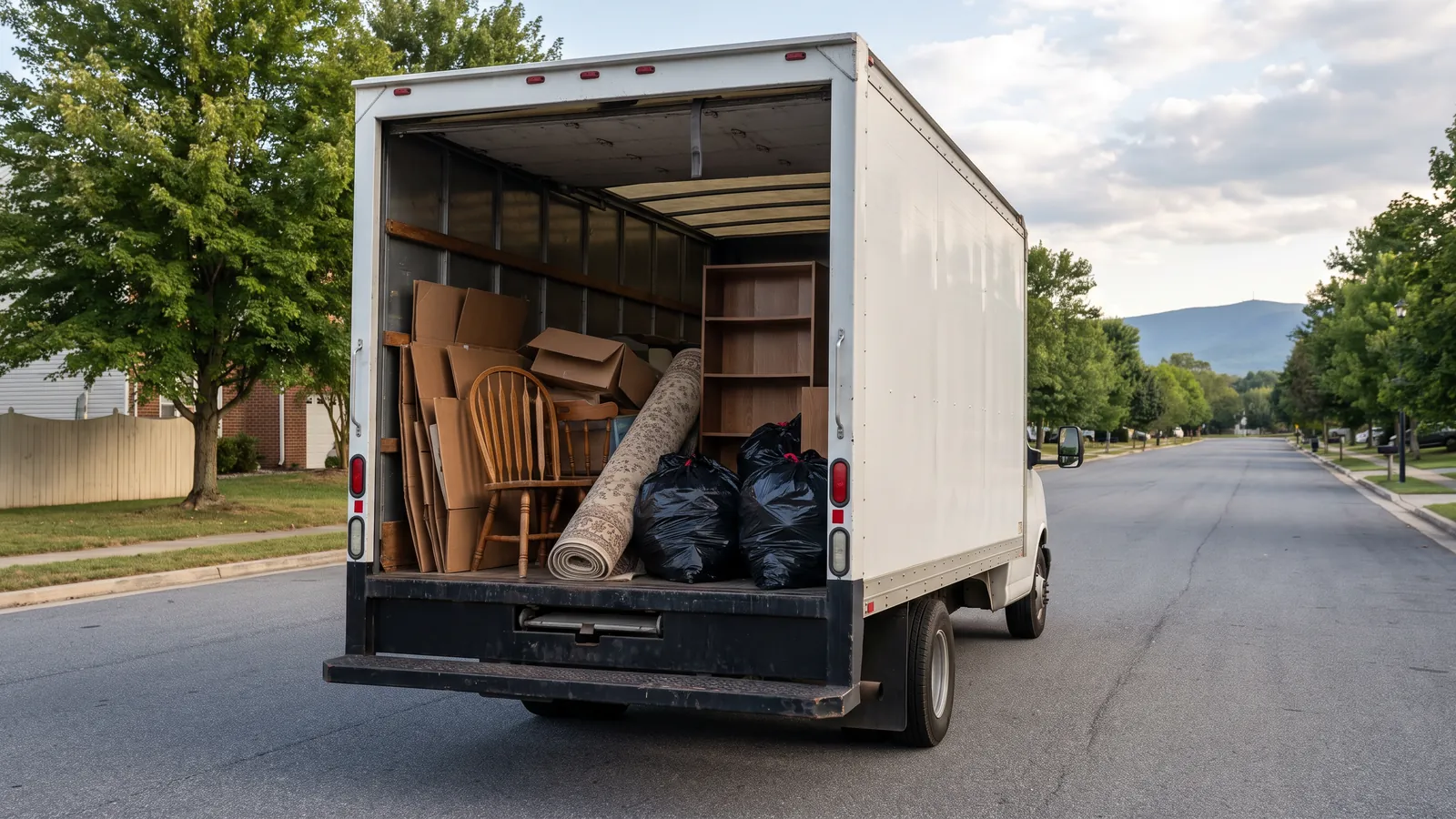
We work for homeowners doing it themselves and for contractors who would rather not lose a crew member and a trailer to the dump every afternoon. A pickup between phases, demolition day, trim-out day, is the usual pattern. We can also be the demo crew for a small job: pulling cabinets, removing a deck, taking out carpet and pad.
What rides and what doesn't
Drywall, lumber, cabinets, countertops, tile, flooring, carpet, pad, doors, windows, fixtures, sinks, toilets, roofing offcuts and packaging all ride. Asbestos-containing material does not, ever, and in houses built before the 1980s that can include floor tile, pipe wrap, popcorn ceilings and some drywall compound; if there is any doubt, a test comes first. Paint, solvents, adhesives in liquid form, and propane do not ride either. Concrete, brick and soil do, as heavy debris priced by weight.
Roofing tear-off
Shingle tear-off is the heaviest common load in town. Hail years, and this is a hail town, fill every truck in the city. We take it by the ton; tell us the roof size and whether it is one layer or two.
What the price covers
Loading from the pile
From the driveway, the garage or the room, including stairs. The crew loads; the contractor keeps working.
Weight-honest pricing
Light loads at the low end, heavy loads at the top, and we say which yours is. Keep tile and concrete separate to pay less.
Sorting
Metal to scrap, clean lumber and cabinets routed to reuse where possible, the rest to the landfill by weight.
Asbestos and liquids
Not taken. Pre-1980s material tested first; paint and adhesives go the hazardous-waste route.
Construction debris removal cost in Colorado Springs
| Load or item | 2026 range | What moves it |
|---|---|---|
| Construction debris, per truckload | $300 to $800 | Light drywall and cabinets low; tile, mortar and concrete high |
| Kitchen remodel, cabinets and counters | about half to a full truck | Usually light; stone counters are heavy |
| Bathroom, tile and fixtures | quoted on sight | Tile and mortar are weight |
| Carpet and pad, a house | about a quarter to half truck | Light but bulky |
| Roofing tear-off | quoted by the ton | One layer or two makes the difference |
| Concrete, brick, soil | quoted by weight | Heavy debris; separate line |
National cost-guide ranges for 2026, here so you can budget. The real number comes after the crew sees the load, before anything is touched, and you can turn it down with nothing owed.
What the work looks like

Questions about construction debris removal
Do you work with contractors?
Yes, and most of them call for the pickup between phases rather than a dumpster that sits on the driveway for a month. One invoice per pickup, or one per job.
Would a dumpster be cheaper?
For a long job with steady debris, maybe. For a weekend demo or a one-phase pickup, usually not, and you don't have a steel box on the driveway. The guide on this site compares the two.
Can you take old tile?
Yes, as heavy debris. Keep it in buckets separate from the drywall and the price is lower than if it's mixed.
What about the pre-1980 house?
If there is any chance of asbestos in floor tile, pipe wrap, ceiling texture or old drywall compound, it has to be tested first. We can't take untested suspect material and no honest hauler will.
Do you take the old windows and doors?
Yes. Aluminum frames go to scrap; a solid-wood door in good shape is routed to reuse where possible.
Can you do the demo too?
Small demo, yes: cabinets, carpet, a deck, a shed, non-structural walls with the contractor's say-so. Nothing load-bearing and nothing involving the gas or electrical service.